


A growing awareness of volatile organic compounds (VOCs) in products, including paints, is influencing the way consumers approach introducing new elements into their homes. The global low-VOC paint market is expected to reach $384 billion by 2035.
Explore the characteristics and benefits of low- and zero-VOC paints in this guide.
What Is a VOC in Paint?
VOCs are chemicals that evaporate into the air as paint dries, contributing to that “new paint smell.” They are used to keep the paint in liquid form and help it spread smoothly, dry quickly and adhere to surfaces.
However, while you apply the paint and while the paint is drying, VOCs disperse into the air and negatively affect air quality. Although the chemical release is higher with wet paint, dry-painted surfaces also release gases during the paint curing process.
The Relationship Between Indoor Air Quality and Paint
Indoor air contains approximately two to five times more VOCs than outdoor air. Here’s how VOCs in paint can pose risks to your home’s air quality and occupants:
- Indoor ventilation: The ventilation in your home influences how outdoor and indoor air interact. If you’re redecorating rooms with minimal ventilation, airborne compounds can become more prevalent.
- Paint surface area: Especially when painting walls and other large surfaces, the impact on indoor air quality is greater. The exposure from larger surfaces, such as walls and ceilings, is also higher.
- Higher risks for people with respiratory challenges: Poor indoor air quality has considerable consequences for those with respiratory conditions like asthma. Slight changes in air quality resulting from painting can cause significant discomfort.
- Long-lasting effects: VOCs in paint can have a lasting impact on indoor air quality, lasting from days to months. Opting for low-VOC paints minimizes their impact on indoor air quality, helping maintain a healthier home.
What Are the Health Risks Associated With VOCs in Traditional Paint?
The VOCs found in traditional paints and other household products can cause both short-term and long-term health effects.
Short-Term Health Risks
Common symptoms of VOC exposure may include:
- Nose, eye and throat irritation.
- Dizziness and headaches.
- Fatigue and nausea.
Long-Term Health Risks
VOCs can also lead to longer-term health concerns:
- Organ damage: Prolonged VOC exposure can lead to organ damage, particularly with the central nervous system, liver and kidneys.
- Respiratory conditions: VOCs may worsen symptoms in people with chronic respiratory conditions, such as asthma.
- Potential cancer risk: Long-term exposure can increase the likelihood of cancer in animals and humans.
What Is Considered Low-VOC Paint?
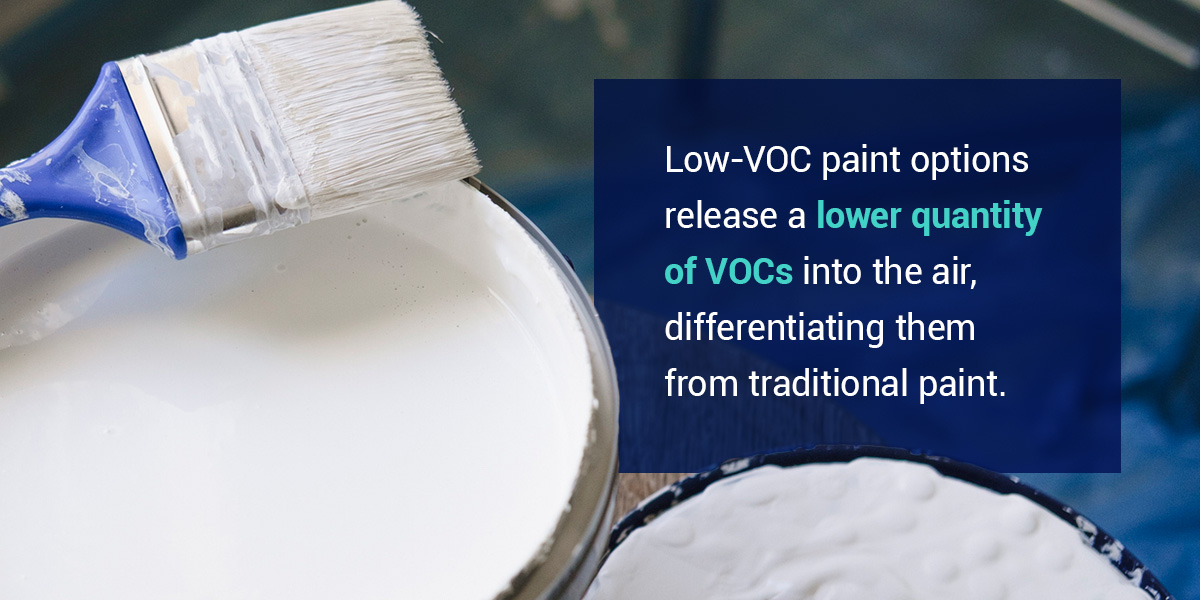
Low-VOC paint options release a lower quantity of VOCs into the air, differentiating them from traditional paint. They offer a greener alternative to help maintain healthier home spaces and improve air quality. Below are the criteria that define a low-VOC paint:
- VOC quantity threshold: A cap of 50 grams per liter (g/L) or lower is required for a paint to have low-VOC content. The 50-g/L limit is a general standard for all low-VOC paints to keep the same quality and reduce emissions. In contrast, traditional paints typically contain VOC levels of approximately 350 g/L.
- Oil vs. water paints: Acrylic and water-based latex paints have lower VOC quantities than their oil-based counterparts. The reduced VOC quantity indicates a high water content and minimal solvent use. Oil-based traditional paints typically contain higher VOC and solvent levels.
Some paint manufacturers may declare eco-friendly intentions through their labeling. However, it’s advisable to review safety data sheets (SDS). These documents provide an accurate measurement of VOC content within the paint product.
What Is Zero-VOC Paint?
Zero-VOC paint options aim to use minimal amounts of VOCs, typically less than 5 g/L. The 5-g/L limit is a standard for the industry to produce paint with the least environmental impact.
Keep in mind that even zero-VOC paints can contain a small amount of VOCs because of the chemical content of colorants. The difference between low-VOC and zero-VOC is minimal — however, zero-VOC alternatives offer significantly lower emissions.
10 Benefits of Low- or No-VOC Paint
Eco-friendly paint options typically have similar performance ratings to those of traditional paints. Improvements in formulations allow low- and zero-VOC alternatives to achieve longevity and lasting aesthetic appeal. The benefits of low- or no-VOC paint include:
- Superb finishes: The durability and quality of these finishes are comparable to those of traditional paints. Low- and zero-VOC paints can maintain a consistent finish and withstand everyday wear and tear.
- Sustainable materials: Low-VOC paints typically include a blend of sustainable ingredients, such as clay and plant oils. The use of renewable materials reduces the need for high-VOC ingredients, such as toluene and benzene, which are harmful to the environment.
- Variable color selection: Much like traditional paints, low- and zero-VOC options also provide a wide range of color options. Despite the lower VOC content, there is no compromise on color palettes to achieve your desired aesthetic and improve air quality.
- Better breathability: Low-VOC paints have a microporous structure that helps control moisture. The metric to measure breathability is steam diffusion (SD). Paints with low SDs exhibit better breathability. Moisture can escape easily, preventing the growth of mildew and mold.
- Minimal odors: Paints with low VOC content emit less harsh odors than traditional paints. Traditional paints emit strong odors that can take considerable time to dissipate.
- Fast drying time: The water content in low-VOC paints allows moisture to evaporate and dry more quickly.
- High moisture resistance: Low-VOC paints offer strong resistance to stains and moisture. Paints with lower VOC content are preferable for environments such as kitchens and bathrooms.
- Cleaning resistance: Low-VOC paints offer high resistance to cleaning and scrubbing. Therefore, walls and other surfaces painted with low- or zero-VOC paints can hold up well against routine cleaning. Conventional paints are also more challenging to clean, whereas soap and water simply clean water-based paints.
- Low environmental impact: Compared to traditional paints, low-VOC alternatives have a lower environmental impact due to their reduced VOC content.
- Full coverage and adhesion: Binders within low- and zero-VOC paints allow strong compatibility with a range of surfaces, including timber and drywall. These paint products provide good coverage across various surface types.
How to Select the Right Paint
Opting for low- or zero-VOC paint is a sustainable choice. However, it’s important to keep a few factors in mind before you buy. Here are some practical tips to help with your decision:
- Examine the small print: Paints may claim to be eco-friendly. However, you can check the VOC content by examining the small print for the g/L limit.
- Prioritize certified paints: A third-party stamp of approval provides confidence that you’re investing in a healthier, low-VOC paint choice.
- Research product reviews: Before you buy, research the paint and read customer reviews. Focus on considerations such as odor and drying times.
- Look for other chemicals: Although a paint may contain low VOCs, a brand may substitute them with other chemicals. Evaluate the small print in detail.

Discover Quality Low-VOC Painting Jobs for Your Home
At The Ohio Painting Company®, our experienced team provides pristine painting jobs across Cincinnati, Columbus, Dayton and surrounding areas. Whether you require interior or exterior painting work, our team aims to deliver exceptional results with low-odor paints.
Since 2011, our painting team has upheld great pride in their work, with limited disruption to your routine, honest quotes and durable quality that lasts for years to come.
Ready to transform your home into a warm and welcoming space? Request your painting estimate today.