
A fresh coat of paint is an instant mood booster, a room brightener and your walls’ statement piece. But when exactly is the right time to refresh your interior? Is it every two years, or can you stretch it to seven?
The truth is, there’s no single answer. The lifespan of your interior paint depends on several factors, including the specific room and the quality of the paint used. This guide provides a comprehensive, room-by-room timeline specifically tailored for homeowners in the Dayton, Ohio area so you can keep your home looking its best.
How Long Does Interior Paint Last?
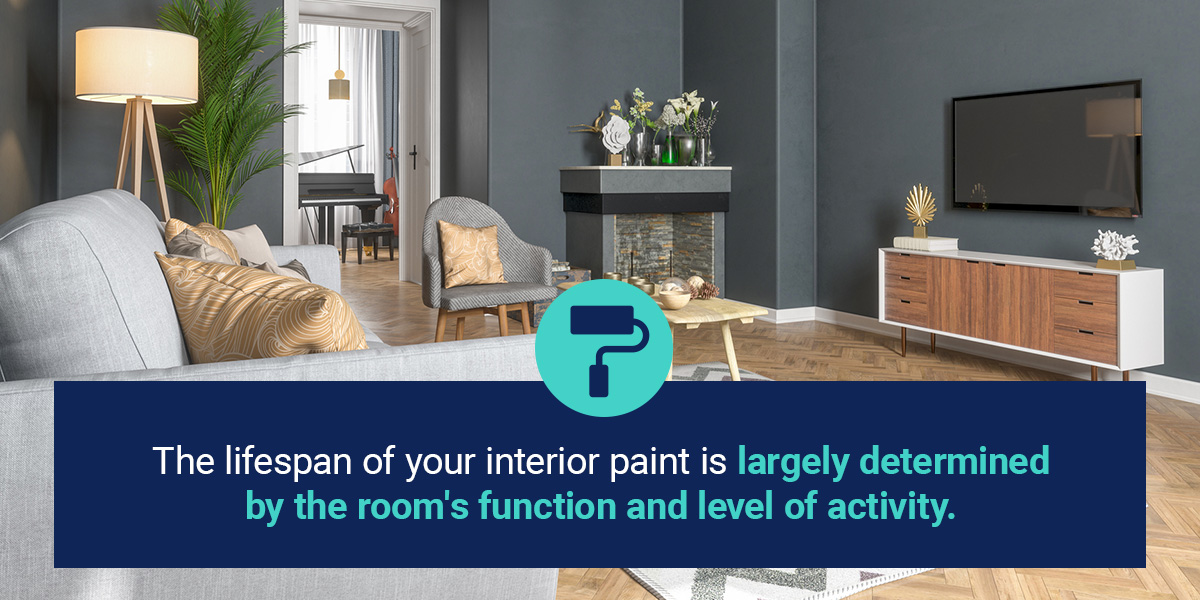
The biggest secret to a long-lasting paint job is understanding that not all rooms are created equal. Your bustling hallway’s paint will not last as long as that guest bedroom that is only used once a year. So, how often should you repaint a room? Here’s a detailed look at when each area is usually ready for its next glow-up:
High-Traffic Areas
These are the gladiators of your home, constantly facing physical contact, moisture and the frequent cleaning, which dramatically shorten the paint’s lifespan to two to four years. High-traffic areas include:
- Hallways and entryways: These areas see everyone, including kids, pets, guests, packages and luggage, all day long, and need repainting more often. They are prone to scuffs, scrapes and marks from daily foot traffic, moving furniture, backpacks and constant door openings.
- Kitchens: Steam-filled mornings, grease-splattered evenings and the occasional pasta sauce explosion can quickly wear down even the most durable kitchen wall finishes.
- Bathrooms: The constant cycle of steamy showers and dry air can turn pristine walls into a peeling, mildew-prone mess. A fresh coat of paint in your bathroom every few years is often necessary for both hygiene and aesthetics.
- Kids’ bedrooms and playrooms: If you have young children, you know these rooms see more wear and tear than any other. From sticky hands and errant crayon marks to scuffs from furniture and general play, the walls here need repainting every few years.
Low-Traffic Areas
These rooms are primarily used for relaxation or formal gatherings. Since they experience less direct physical contact, their paint tends to last significantly longer, around five to seven years. You usually repaint these areas because you’re tired of the color or it has gently faded, rather than because of necessity. They include:
- Living and dining rooms: While these rooms are a central part of your home, people spend less time leaning, bumping or touching the walls compared to a kitchen or entryway. You might notice some gentle fading or a stray mark near the sofa, but nothing too dramatic.
- Primary and guest bedrooms: A quality paint job in a bedroom can easily grace your walls for seven years, maybe even more if they are not in direct contact with ultraviolet (UV) rays from nearby windows.
Ceilings and Trim
These surfaces are surprisingly durable, holding strong for seven to over 10 years. They typically avoid the direct wear of daily life but have their own subtle ways of showing their age:
- Ceilings: Because ceilings are rarely touched, their longevity is excellent. The main reason for repainting a ceiling is to cover up discoloration or yellowing caused by age, smoking in the home, or water damage from a roof or plumbing leak.
- Trim: Trim, including baseboards and door frames, is typically painted with a durable, semi-gloss or high-gloss finish. These are highly resistant to scuffs and fingerprints. While the baseboards may occasionally get scuffed from a vacuum cleaner or shoes, the gloss finish makes them easy to wipe clean.
Key Factors That Affect Interior Paint Lifespan
Several indoor paint durability factors can shorten or significantly extend the life of your paint job. Understanding these will help you gauge how long your interior paint’s lifespan will truly be.
The Quality of Paint and Primer
This is arguably the most crucial factor. You get what you pay for when it comes to paint. Premium paints contain higher concentrations of solids, which are binders and pigments. Binders are the glue that holds the pigments together and makes the paint adhere to the wall. Better binders mean a more durable, longer-lasting finish that is easier to clean and resists fading and cracking. A high-quality interior primer is also essential for proper paint adhesion.
Sunlight Exposure
Direct sunlight is an invisible enemy to interior paint. Rooms with large windows, especially those facing south, receive constant UV exposure. This can cause paint colors to fade or become chalky over time, dramatically altering the room’s intended look. Darker colors are particularly prone to noticeable fading.
Your Lifestyle
Your day-to-day life directly impacts how frequently you need to repaint. Homes with furry friends and active kids will invariably need more frequent touch-ups. Paw marks, mud and general mishaps lead to increased need for cleaning and, eventually, repainting. Walls that are constantly rubbed, bumped or leaned against will show scuffs and fingerprints faster than those in a seldom-used guest room.
Temperature Fluctuations and Climate
Ohio’s weather can be tough on homes. Extreme hot or cold temperatures, and rapid changes between them, can cause walls and the paint film itself to expand and contract. Over time, this can lead to hairline cracks or wear marks on the paint.
Ohio’s humid summers can greatly affect interior paint, particularly in kitchens, bathrooms and homes without modern central air conditioning. High humidity traps moisture against the walls, which encourages mildew and weakens the paint’s bond.
How to Make Your Interior Paint Last Longer
You can take these proactive steps to maximize the lifespan of interior paint:
Choose the Right Paint Finish
The finish or sheen of your paint is a crucial factor in its durability and scrub resistance. Opt for glossier finishes like satin, semi-gloss or gloss in high-wear areas like kitchens, baths and hallways, as they are more durable and easier to clean than flat paint. Matte or flat finishes are best for ceilings or adult bedrooms.
Proper Cleaning and Maintenance
Resist the urge to scrub painted walls too hard. Your mission is to lift the mark, not wage war on your paint. For most scuffs, use a soft cloth or sponge with warm water and a tiny bit of mild dish soap, then pat the area dry. Always test any cleaning method on a hidden spot first to ensure it doesn’t dull the finish.
Ensure Good Ventilation
Mitigate the effects of moisture, especially in Dayton’s humid climate. Always use exhaust fans in kitchens while cooking and in bathrooms during and immediately after showering. It pulls the moisture-laden air out of the room, preventing condensation from settling on the walls and leading to mildew or peeling.
Partner With Painters You Can Trust Today
Repainting improves your home’s overall aesthetic. While you can extend your paint’s life with proper maintenance, nothing compares to the quality and durability provided by a professional. A meticulous professional paint job, complete with surface preparation and the use of premium, flexible materials, is designed to last.
The Ohio Painting Company is your trusted local expert for interior painting throughout the Cincinnati and Dayton area. Our team uses top-notch, durable paints from the top brand names in the painting industry and proven techniques to deliver a beautiful, long-lasting result. Contact us today to request an estimate and transform your home with quality interior paint work.